
If humans ever build a permanent city on Mars, the first question is not where the skyline goes. It is where the water is.
Water is drinking supply, hygiene, cooking, medical care, plant growth, chemistry, fire control, radiation shielding, oxygen production, and potentially rocket propellant. It is also heavy. Launching every liter from Earth would make a large settlement brutally expensive and fragile. A real Mars migration program would need to live partly off the land, and that means treating Martian water as a strategic resource.
The hopeful part is that Mars is not dry in the simple sense. It has polar ice caps, buried ice, hydrated minerals, frost, ancient riverbeds, and evidence that liquid water once shaped the planet. The difficult part is that useful water is not automatically accessible water. A future settlement has to find deposits that are close enough to the equator for safer landing and solar power, shallow enough to reach, clean enough to process, and abundant enough to support decades of growth.
Water Decides Where the First Cities Can Grow
For early Mars settlements, water will shape geography as much as terrain safety or sunlight. A base placed near shallow ice can make oxygen, grow food, clean equipment, buffer emergencies, and eventually manufacture propellant. A base far from usable water has to import more from Earth or spend enormous energy hauling ice across the surface.
This is why water appears so often in human landing-site discussions. The best settlement location is not simply the wettest place. Mars’s polar regions have enormous ice resources, but they are colder, darker in winter, and harder for some mission architectures. Equatorial regions are warmer and often easier for landing and power, but shallow ice may be less common. The practical sweet spot may lie in mid-latitudes where buried ice is reachable but the site is still manageable for surface operations.
By 2300, a mature Mars civilization might use many sources: shallow ground ice, polar deposits, atmospheric humidity, mineral-bound water, and deep aquifers if they can be reached. But the first large settlements will probably depend on the resource that is easiest to prove and mine at scale: near-surface water ice.
The Treasure Map Is Being Drawn From Orbit
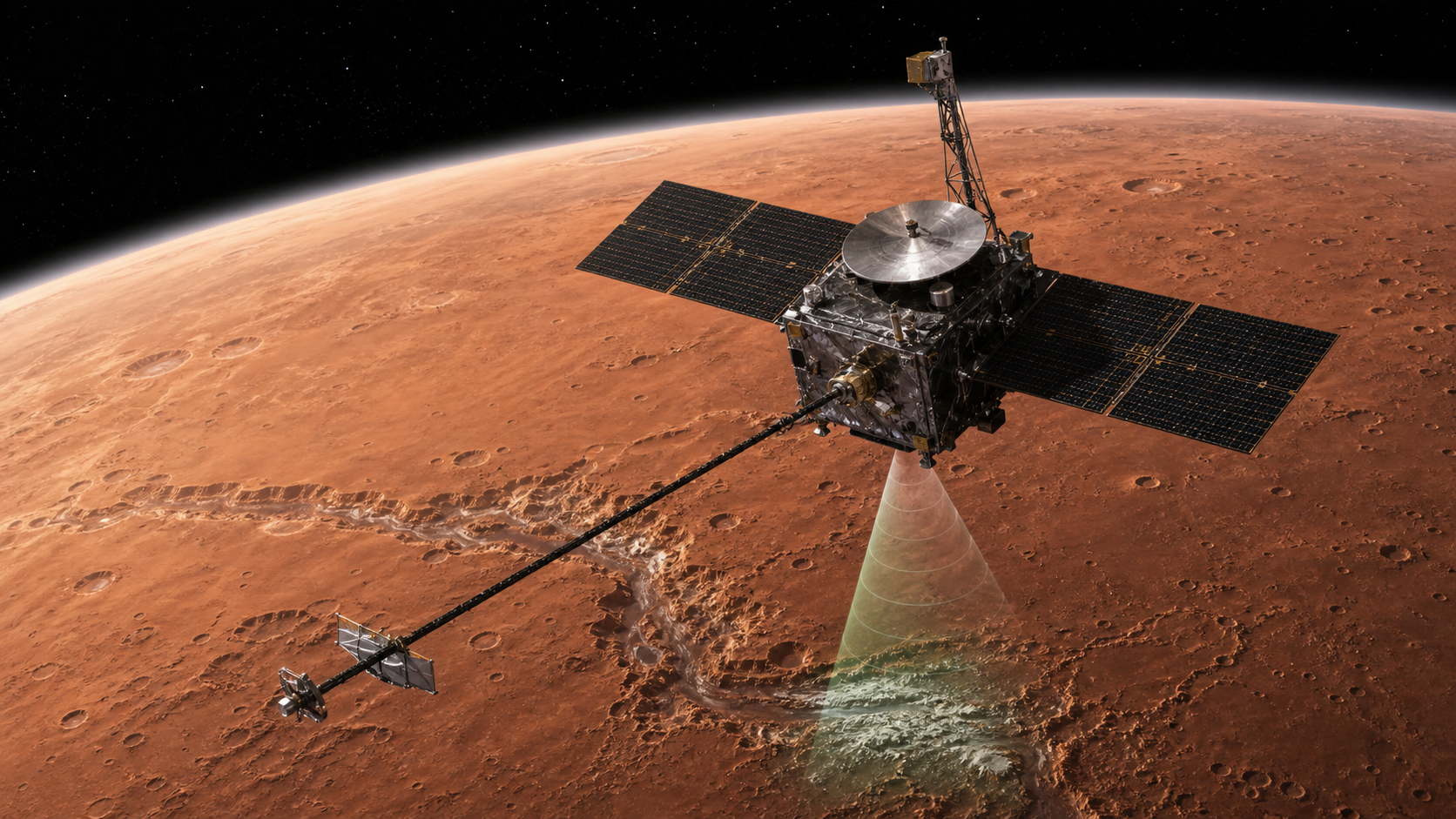
Today, scientists look for Martian water ice by combining many clues. NASA’s Mars Odyssey and Mars Reconnaissance Orbiter have helped map hydrogen, temperature patterns, surface textures, and buried ice indicators. The NASA-funded Subsurface Water Ice Mapping project, known as SWIM, combines multiple orbital datasets to estimate where shallow ice may be present across broad parts of the planet.
The reason this matters for settlers is depth. Ice a few meters below the surface is a very different resource from water tens of kilometers down. A rover-scale drill, construction robot, or mining rig might reach shallow ice. A deep liquid reservoir inferred from seismic data could be scientifically fascinating, but far harder to use for a young settlement.
Recent research keeps making the picture more interesting. USGS summaries of SWIM work describe shallowly buried ice as a key resource for future human missions and note that some of the strongest ice-consistency values appear poleward of roughly 40 degrees latitude, with some positive indicators extending toward lower latitudes that may be more attractive for landing. Other studies using NASA InSight data have suggested liquid water may exist deep in the Martian crust, perhaps more than 10 kilometers down. That would be a major clue about Mars’s water history, but it is not the same as a convenient municipal well.
Mining Ice Is Not Just Digging
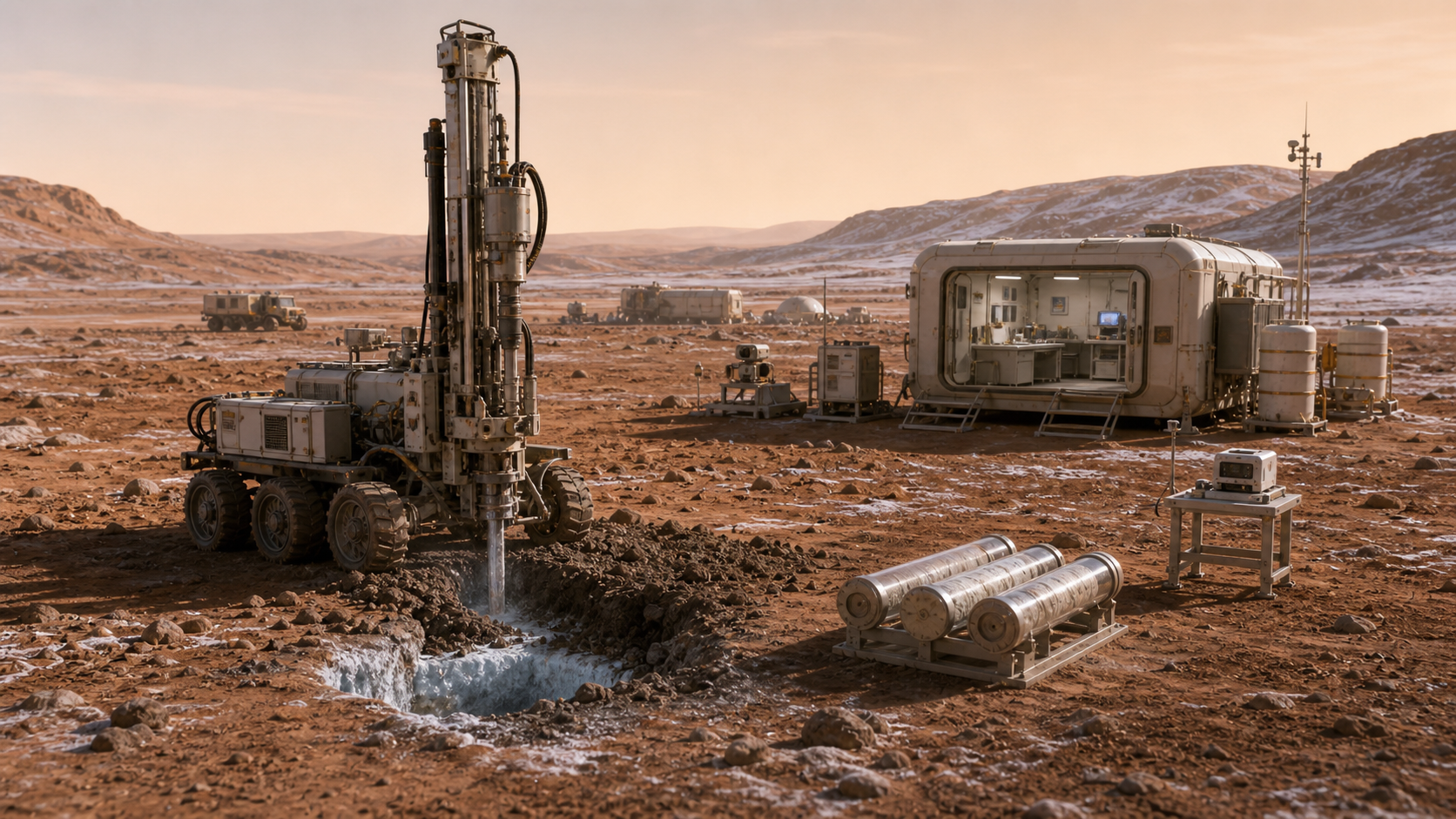
Once a site is chosen, settlers still have to extract water safely. Martian ice may be mixed with dust, salts, perchlorates, and other chemistry that cannot simply go into a drinking tank. The ground may be cemented, rocky, or layered. The equipment must operate in low pressure, cold temperatures, abrasive dust, and partial gravity. A broken drill on Mars is not an inconvenience; it can become a settlement-level emergency.
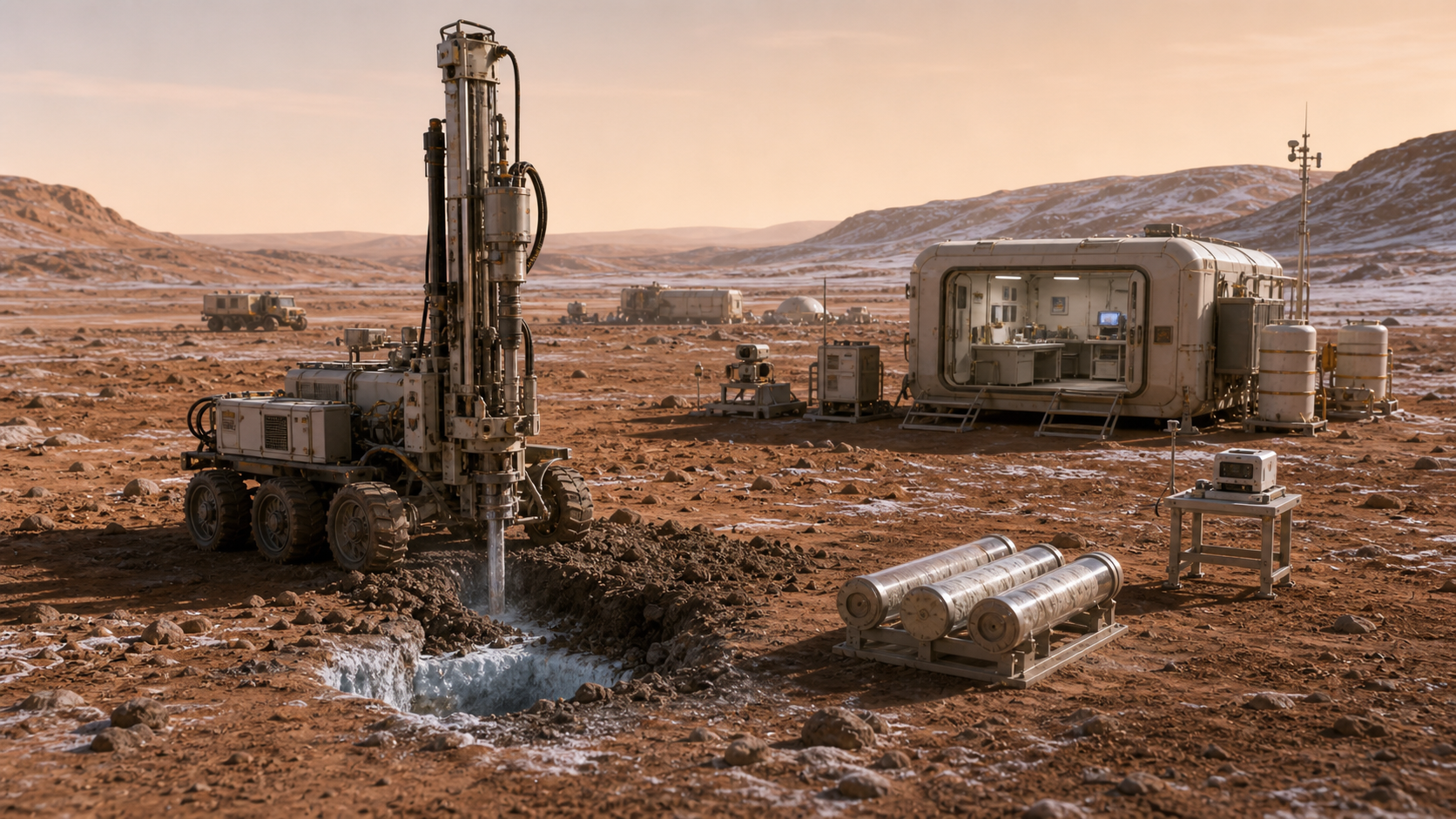
There are several possible extraction methods. Robots could drill into ice-rich ground and bring cores to a heated processing unit. Excavators could scrape icy regolith into sealed hoppers. Heated probes could melt or sublimate ice in place and capture the vapor. Microwave or thermal systems might warm the subsurface without moving large amounts of soil. Each approach trades energy, mechanical complexity, contamination control, and maintenance risk.
For a city, the water mine would need to be boringly reliable. It would have redundant drills, spare cutters, dust seals, sensors, and autonomous fault detection. Robots would do the most dangerous repetitive work. Human crews would supervise, repair, and verify quality from pressurized modules or suited field operations. The water plant would likely start small, then expand in modules as the settlement grows.
Purification Turns Ice Into Life Support
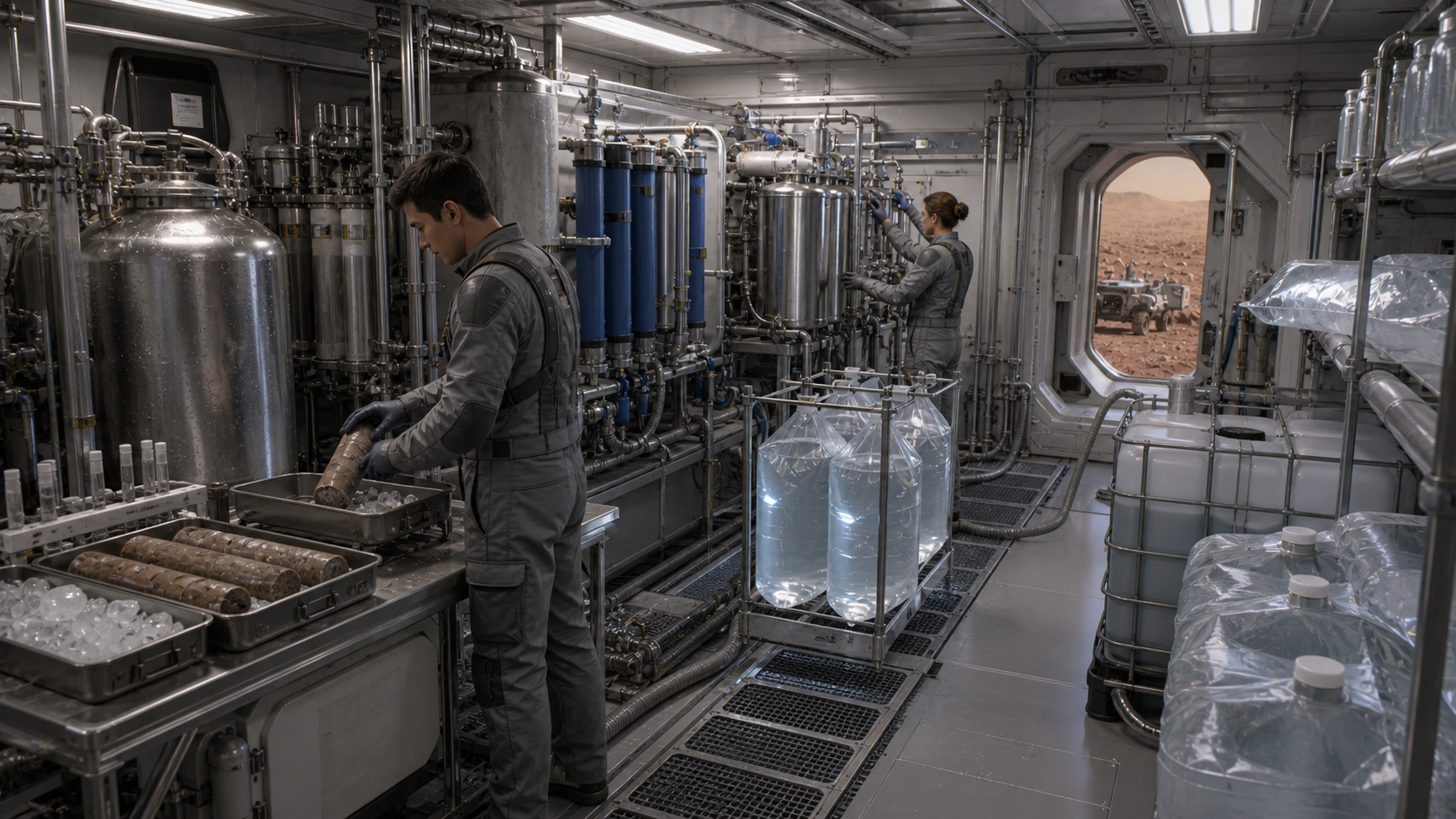
Water mined on Mars would not go straight to the kitchen. It would enter a chain of melting, filtration, chemical treatment, distillation or membrane separation, sterilization, and monitoring. Engineers would care about dissolved salts, perchlorates, metals, microbes from the habitat, dust particles, pH, and equipment corrosion.
Different uses require different quality levels. Drinking water and medical water need the tightest controls. Hydroponic systems need clean water with carefully managed nutrients. Industrial water for construction or dust suppression may tolerate more impurities. Electrolysis systems that split water into hydrogen and oxygen need feedstock that does not poison membranes, electrodes, or catalysts.
This creates a practical lesson for Mars city design: water is not one tank. It is a managed inventory with grades, loops, buffers, treatment steps, and emergency reserves. A settlement would track where every liter is, what it has touched, how clean it is, and whether it can be safely returned to another loop.
Recycling Will Be as Important as Mining
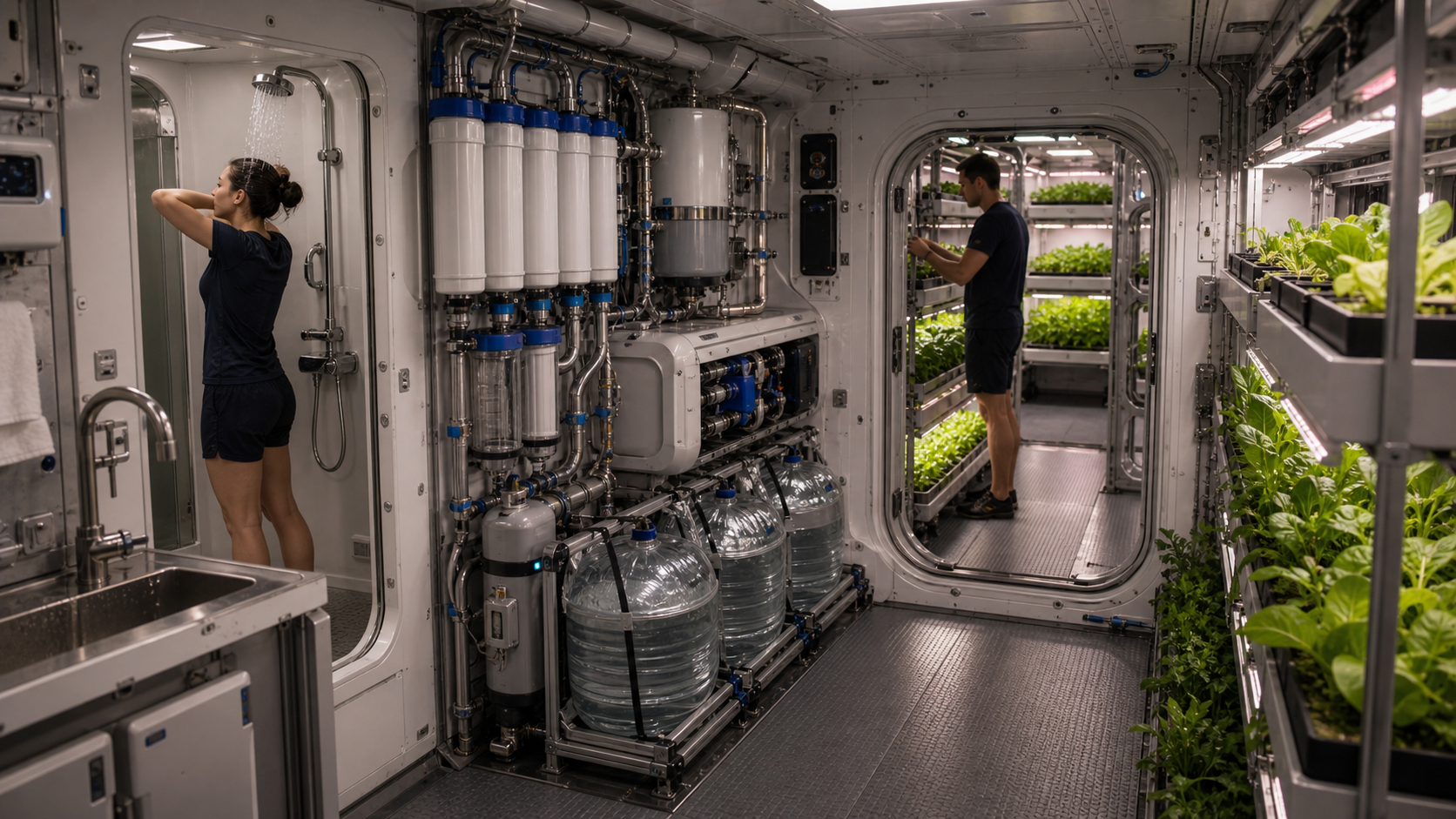
On Mars, the cheapest liter of water is the one you do not lose. NASA’s work on the International Space Station has already pushed closed-loop life support toward very high recovery levels. In 2023, NASA reported that upgrades to the station’s Environmental Control and Life Support System helped reach a 98 percent water recovery goal for astronaut wastewater.
That number matters because losses compound. A system that loses only a small percentage still needs makeup water, and a growing settlement has more sources of loss: leaks, maintenance, crop harvesting, airlock operations, sample handling, construction, medical care, and manufacturing. Mars will need local water, but it will also need ruthless recycling.
A city-scale loop would capture humidity from cabin air, recover hygiene water, process urine, reclaim greenhouse condensation, monitor plant transpiration, and reuse industrial water when safe. The system would be designed in layers so one contaminated loop does not poison the whole settlement. Water recycling would become invisible civic infrastructure, like plumbing on Earth, except with far less room for waste.
Water Becomes Oxygen, Shielding, and Fuel
Water is valuable because it can be split. Electrolysis can turn water into oxygen and hydrogen. Oxygen supports breathing and can serve as oxidizer for rockets. Hydrogen can be combined with carbon dioxide from the Martian atmosphere to make methane fuel, or it can be used in other chemical processes. NASA’s MOXIE experiment on Perseverance proved a different but related idea: oxygen can be produced directly from Mars’s carbon dioxide atmosphere. A mature settlement may use both atmosphere-derived oxygen and water-derived oxygen, depending on energy, reliability, and chemistry needs.
Water also shields. Hydrogen-rich materials are useful against some radiation hazards, so tanks, water walls, or storage bladders can be placed around storm shelters and sleeping areas. This gives water a second job while it waits to be consumed or processed. In a careful Mars habitat, storage is architecture.
Storage Is a Survival System
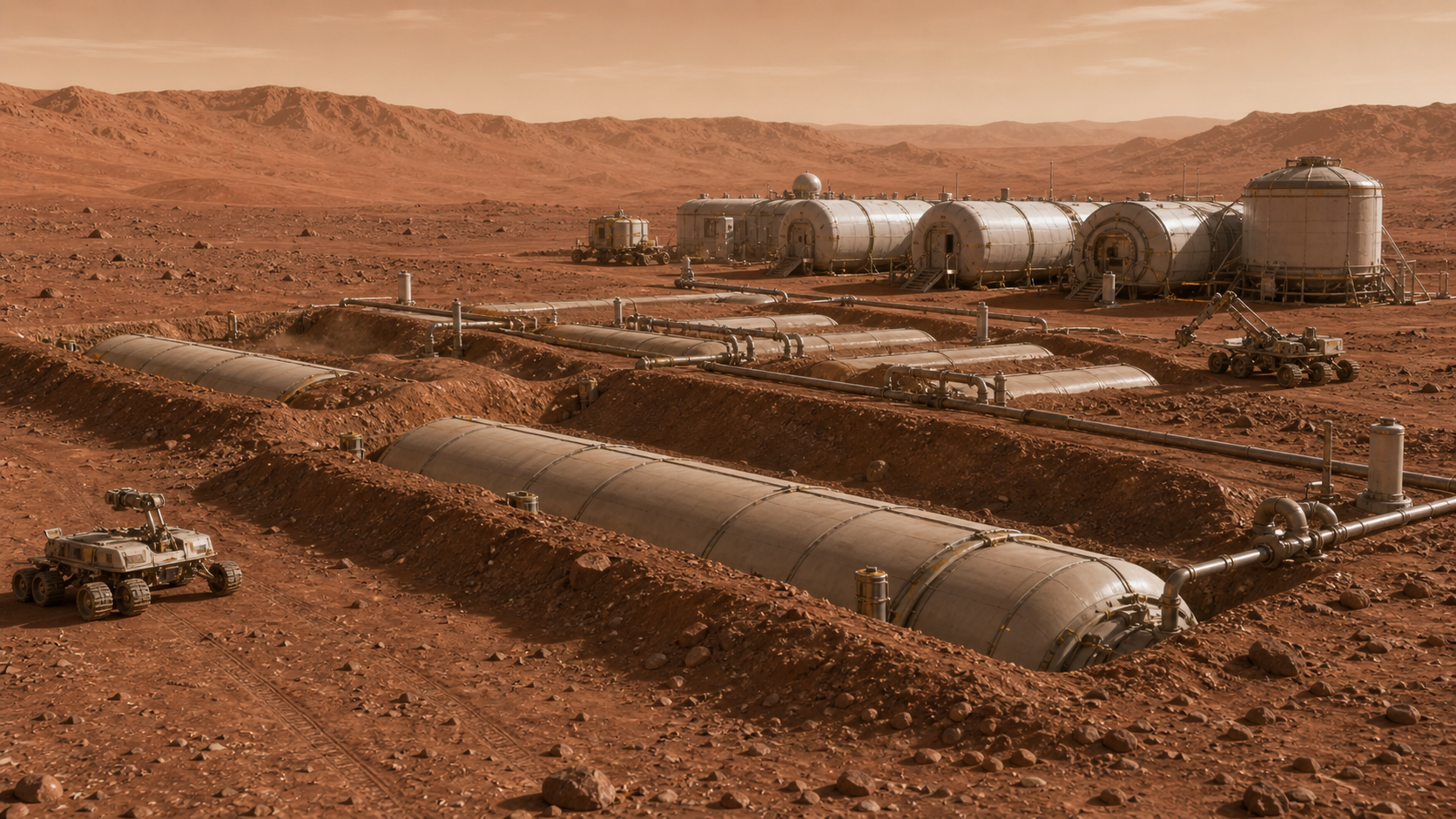
Water storage on Mars has to survive cold, low pressure, dust, radiation, and long emergencies. Tanks may be buried or bermed with regolith for thermal stability and protection. Pipes may need heat tracing, insulation, and leak sensors. Some water might be stored as ice for long-term reserves, while other supplies remain liquid for daily use and life support.
A settlement would not keep all water in one place. It would distribute reserves among habitats, greenhouses, emergency shelters, industrial modules, medical facilities, and propellant plants. That way, a tank rupture, valve failure, contamination event, or power outage does not threaten the entire city at once.
What Can Still Go Wrong
The biggest water risk is not that Mars has none. It is that the useful deposits may be harder, dirtier, deeper, colder, or more scattered than expected. A landing site chosen from orbital data may disappoint once drills arrive. A mine may produce less than models predicted. Purification systems may foul. Storage tanks may freeze. A greenhouse disease or chemical contamination event may force a loop offline. A dust storm may cut power just when heaters and pumps are needed most.
This is why the first water campaign should begin before the first large crew arrives. Robots should map, drill, test, process, and store water in advance. The safest moment for settlers to depart Earth is after Mars has already proven it can make a reserve.
Water will not make Mars easy. But it could make Mars possible. The path from buried ice to civilization runs through mapping satellites, drilling rigs, filters, tanks, recycling loops, power systems, and constant measurement. A Mars city will not be built beside a river. It will have to build the river itself.
Leave a Reply