
If a future civilization had to move thousands of people to Mars, the hardest part would not be building one heroic spaceship. It would be building a transport system that can repeat the journey safely, window after window, for decades.
Mars is close only in a relative sense. Even during favorable alignments, crews would cross deep space for months, outside Earth’s magnetic protection, inside vehicles that must carry air, water, food, repair capacity, medical systems, shielding, communications, and enough redundancy to survive failures that cannot be solved by a rescue boat from home. Then, after the crossing, the system must land heavy payloads on a planet with just enough atmosphere to cause trouble and not enough to make parachutes easy.
So the real question is not, “Can humans fly to Mars?” We already know the physics allows it. The question is whether migration-scale transport can become a disciplined, industrial operation: cargo first, people later, every departure window used with a purpose.
Migration Is a Transportation System, Not a Single Mission
For a Mars settlement program aiming at the year 2300, transportation has to mature from exploration into logistics. Early human missions might carry small crews. A migration program would need to move trained settlers, replacement crews, families, specialists, emergency supplies, construction equipment, medical inventory, seeds, reactors, robots, pressure vessels, communications hardware, and spare parts whose absence could decide whether a settlement survives.
NASA’s Moon to Mars architecture already treats transportation as a broad family of capabilities: crew and cargo travel through space, entry and landing at Mars, ascent from Mars, refueling or recharging, logistics handling, and safe crew return. That is the right way to think about migration. The spacecraft is only one element. The route includes launch pads on Earth, orbital aggregation points, fuel depots, cargo staging, Mars orbit operations, surface landing zones, and a return architecture for crews who must come home or evacuate.
By 2300, thousands of people would not leave as a single crowd. They would move in waves. Each wave would be matched to a favorable Earth-Mars alignment, and each crewed wave would rely on supplies and habitats launched in previous windows. The system would look less like a one-time expedition and more like a slow interplanetary shipping network with strict launch seasons.
The Calendar Decides Everything
Earth and Mars line up favorably about every 26 months. Spacecraft can take many possible trajectories, but low-energy Mars transfers depend on launching when the planets’ positions allow a vehicle to leave Earth and meet Mars months later. ESA describes this as the moment when the spacecraft and Mars can arrive at the same point in space at the same time; the Mars Express mission used such a window for a roughly six-month journey.
That rhythm shapes migration. A settlement program cannot simply decide to send another thousand people next Tuesday. It must build toward launch windows years in advance. Cargo, propellant, engines, crew training, medical screening, surface readiness, and emergency plans all have to converge on a narrow departure season.
This makes Mars transport both easier and harsher than ordinary terrestrial logistics. Easier, because the schedule is predictable centuries in advance. Harsher, because a missed window can mean a delay of more than two years. A broken valve, a failed depot, or a late habitat module could ripple through an entire migration campaign.
Cargo Must Go First
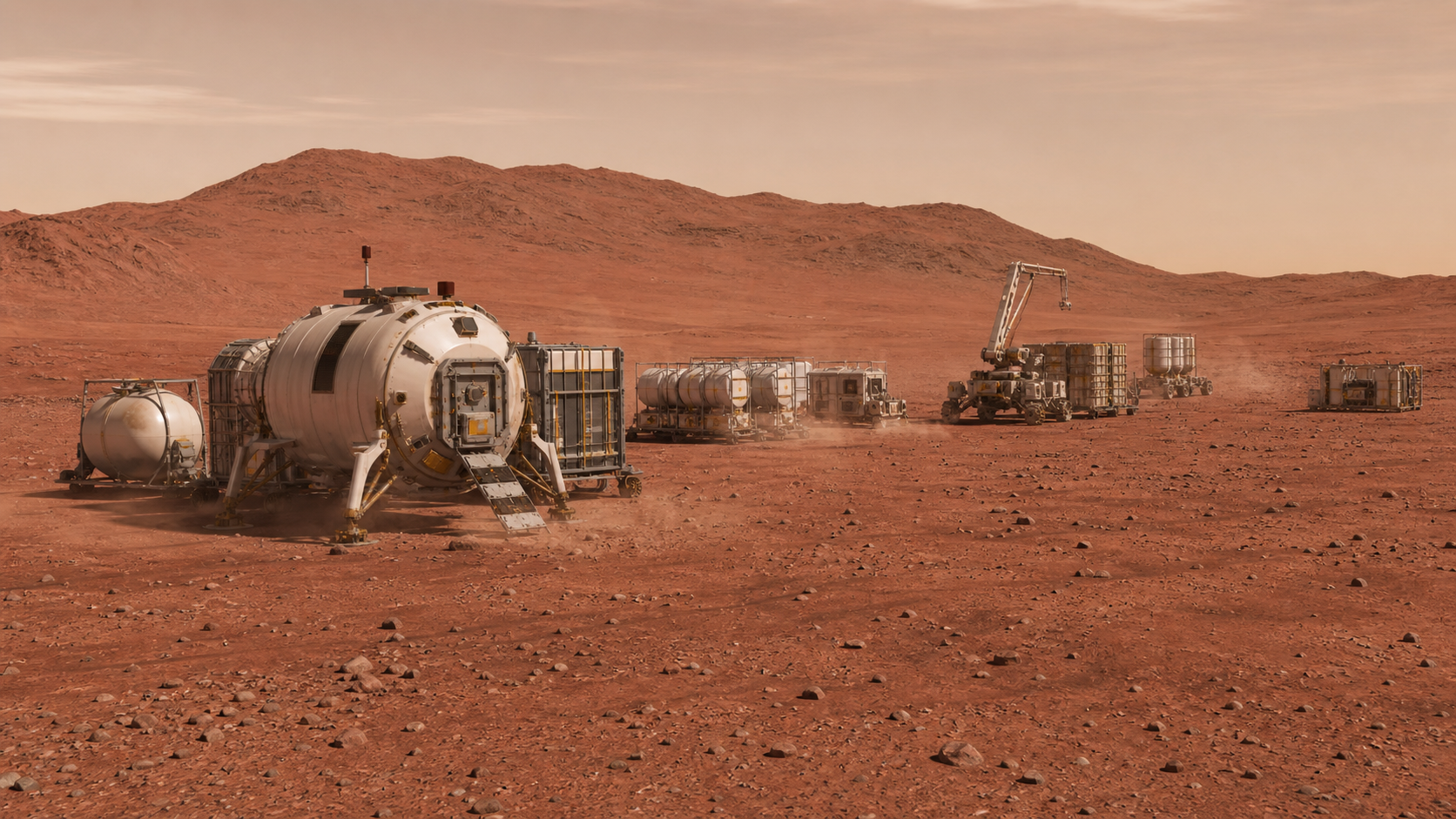
The most conservative way to move people to Mars is to make sure the destination is already waiting for them. That means sending cargo ahead: habitats, power systems, oxygen plants, water-processing equipment, pressurized rovers, communication relays, medical supplies, food reserves, tools, and construction robots.
Cargo-first planning reduces the risk that a crew arrives to an empty or underbuilt site. It also lets mission controllers test surface systems remotely before people depend on them. If a reactor fails to start, a water extractor clogs, or a cargo lander touches down too far from the base, planners can delay the crewed departure instead of turning astronauts into emergency repair teams on day one.
At migration scale, cargo would probably outmass people by a large margin. A single passenger might require many tons of infrastructure when the full chain is counted: living volume, shielding, food production, reserve consumables, surface mobility, medical support, and the industrial equipment needed to expand the settlement. The first thousand settlers would therefore represent not only a human transport challenge, but a cargo-delivery campaign of extraordinary size.
Orbital Refueling Changes the Math
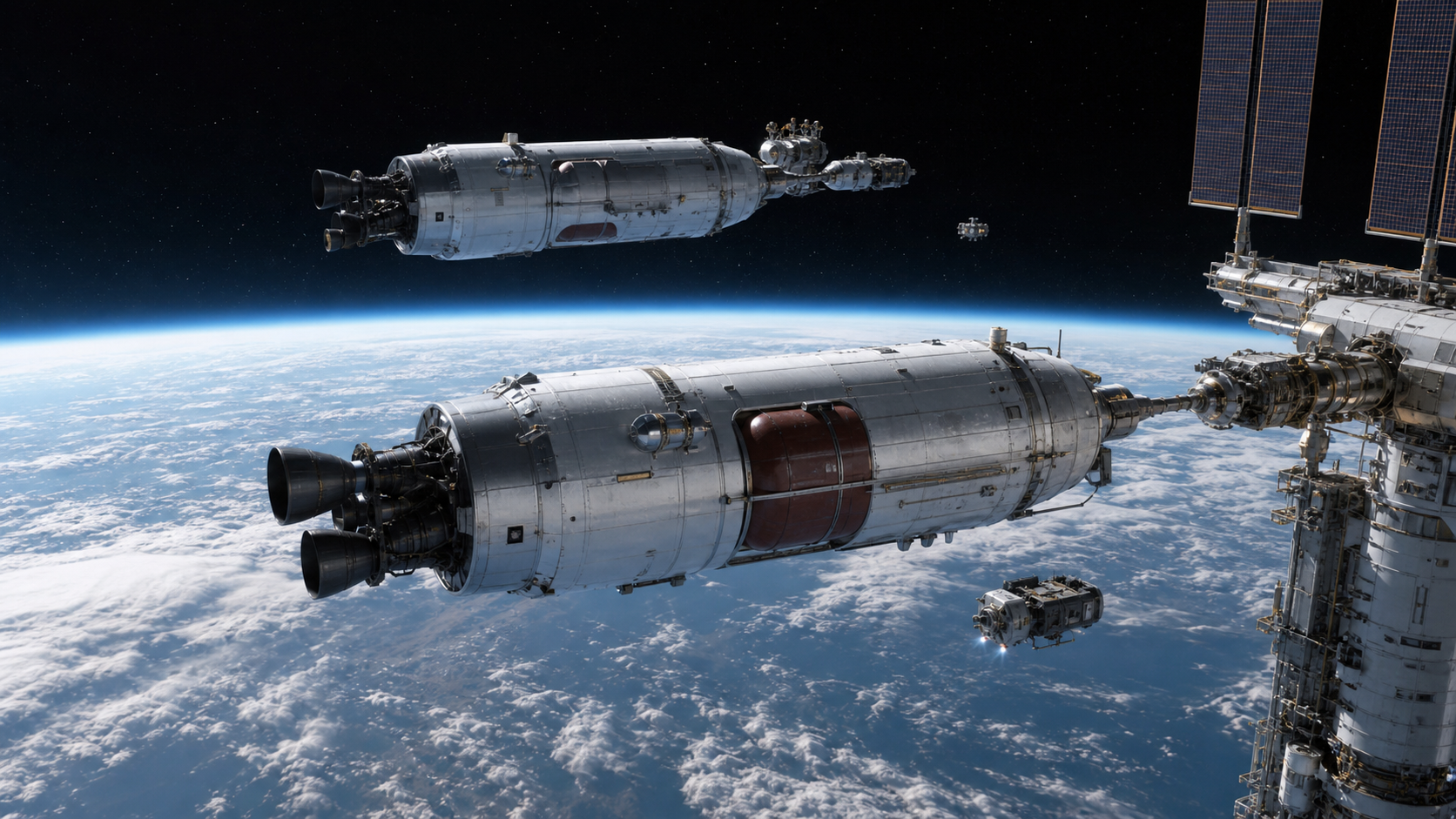
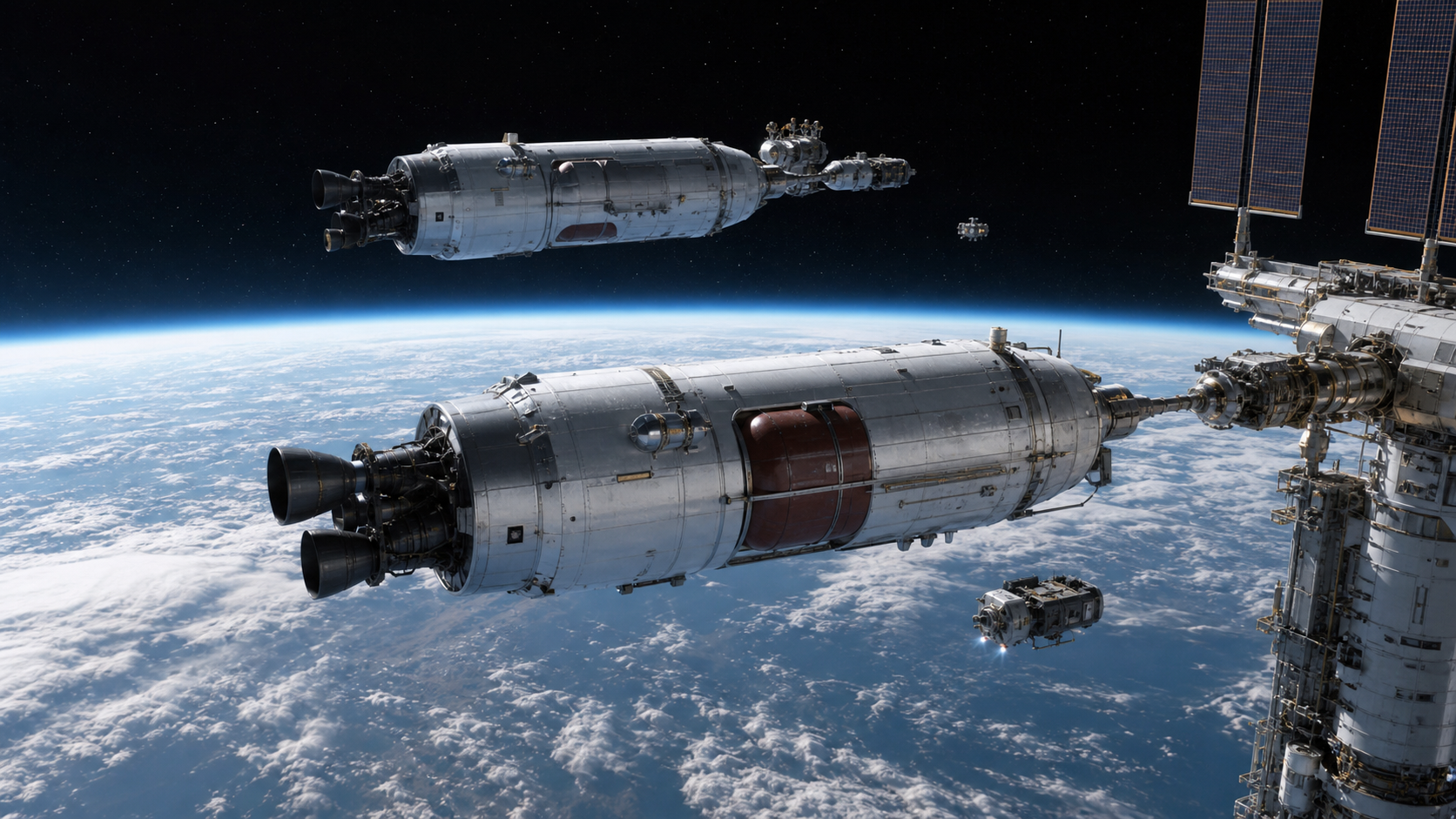
Launching a fully fueled Mars ship directly from Earth’s surface is brutally difficult. A more scalable architecture assembles and fuels vehicles in orbit. Earth launchers would place crew modules, cargo modules, propulsion stages, and propellant into space separately. Tankers or depots would transfer fuel before the Mars departure burn.
This approach does not make Mars easy. It adds operations that must become extremely reliable: docking, cryogenic storage, fluid transfer, boiloff control, inspection, repair, and traffic management around orbital depots. But it avoids forcing every Mars vehicle to be a single enormous launch stack. It also allows a transport system to grow modularly. More cargo can be launched, more propellant can be stored, and multiple Mars vehicles can be prepared in parallel during a departure campaign.
For thousands of passengers, orbital aggregation becomes almost unavoidable. Migration is not just a question of spaceship size; it is a question of cadence. A durable system would need enough launches and depots to build a Mars convoy before the window closes, while maintaining enough reserve capacity for replacement parts, late cargo, and abort options.
Passenger Ships Must Be Habitats
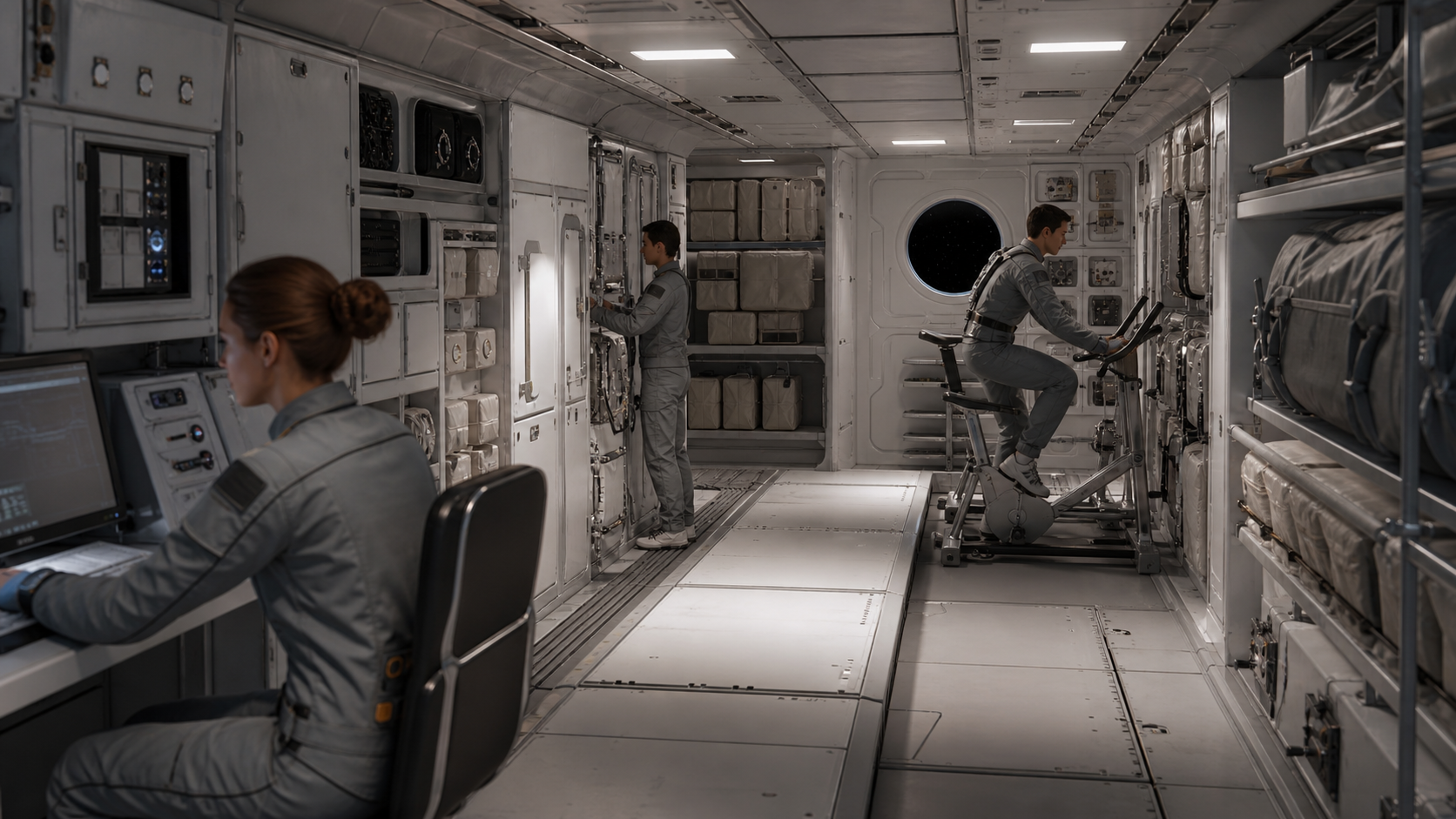
A passenger ship to Mars cannot behave like an airliner. The trip is measured in months, not hours. The vehicle must support sleep, hygiene, exercise, food preparation, privacy, medical care, communications, maintenance, and psychological health in a confined space where outside help is delayed by distance.
The life-support system is central. Air must be cleaned and replenished. Water must be recovered aggressively. Carbon dioxide must be removed. Trace contaminants must be controlled. Waste has to be stored or processed. Fire risk has to be managed in a sealed environment where smoke, toxins, and pressure loss are immediate threats.
Passenger safety also depends on boring details: exercise machines that actually get used, quiet places to sleep, maintenance panels crews can reach, spare parts that can be found quickly, and procedures simple enough to work when people are tired. The more passengers a system carries, the more it must treat spacecraft interiors like operational habitats rather than heroic capsules.
Radiation Is a Trip Design Problem
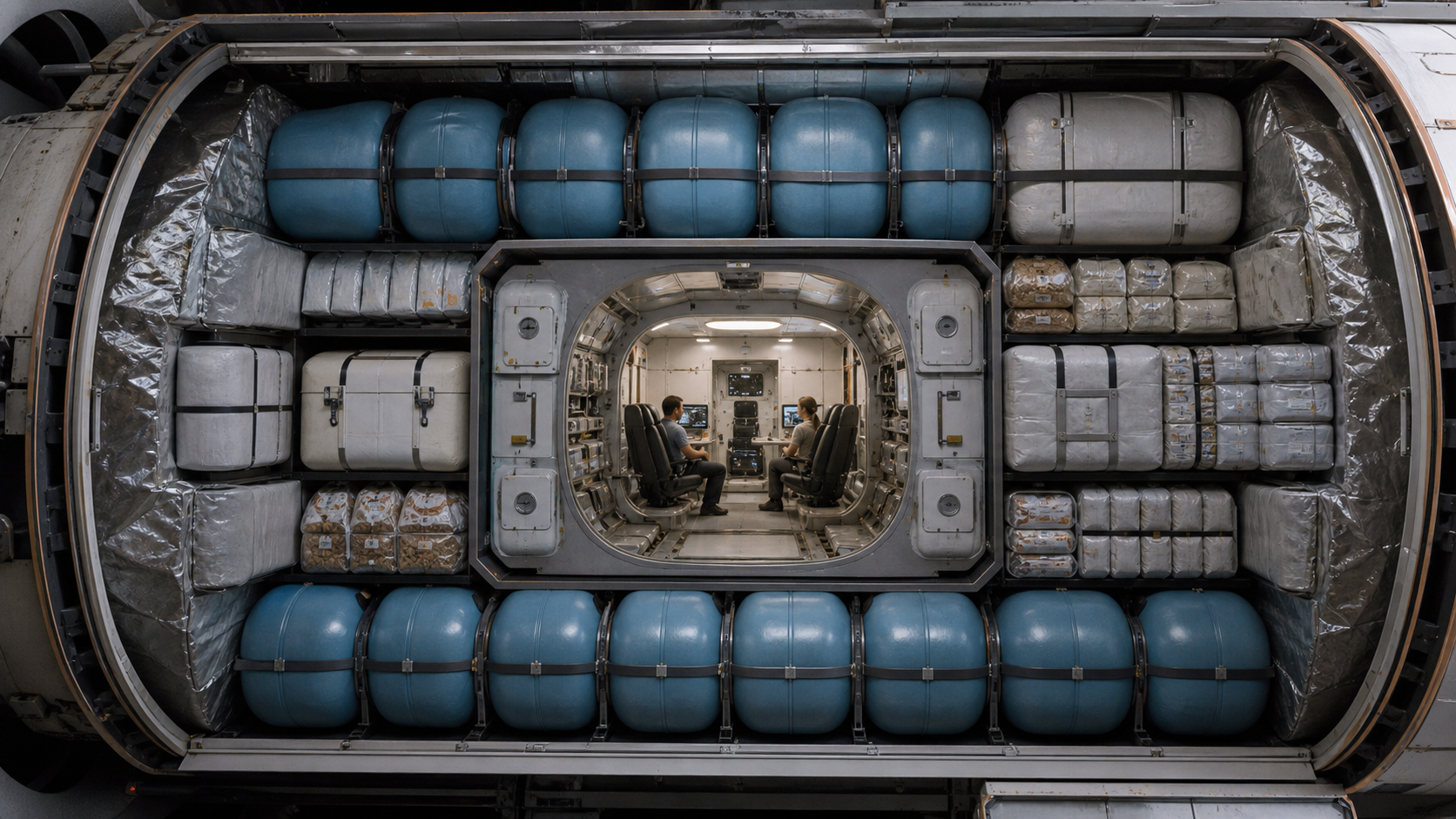
Deep-space radiation is one of the defining risks of Mars travel. Outside Earth’s magnetic field, crews face galactic cosmic rays and solar particle events. NASA’s Human Research Program describes space radiation as a serious hazard for astronauts traveling to Mars, not because it makes the journey impossible, but because exposure must be measured, limited, and mitigated.
For migration, radiation cannot be handled as an afterthought. Transport vehicles would need storm shelters where crews can gather during solar events. Water tanks, food stores, waste containers, and other dense supplies could be arranged around protected areas, turning necessary mass into shielding. Mission planners would also track solar activity, vehicle orientation, travel time, and cumulative exposure across a person’s whole career.
There is a tradeoff hiding here. Faster trips reduce time exposed to deep-space radiation, but faster trajectories may require more energy, more propellant, or more capable propulsion. Heavy shielding reduces exposure, but every kilogram must be launched, fueled, and landed or returned. The best migration architecture may not be the fastest or the most heavily shielded; it may be the one that balances exposure, cost, reliability, and repeatability over many flights.
Landing Heavy Payloads Is Its Own Frontier
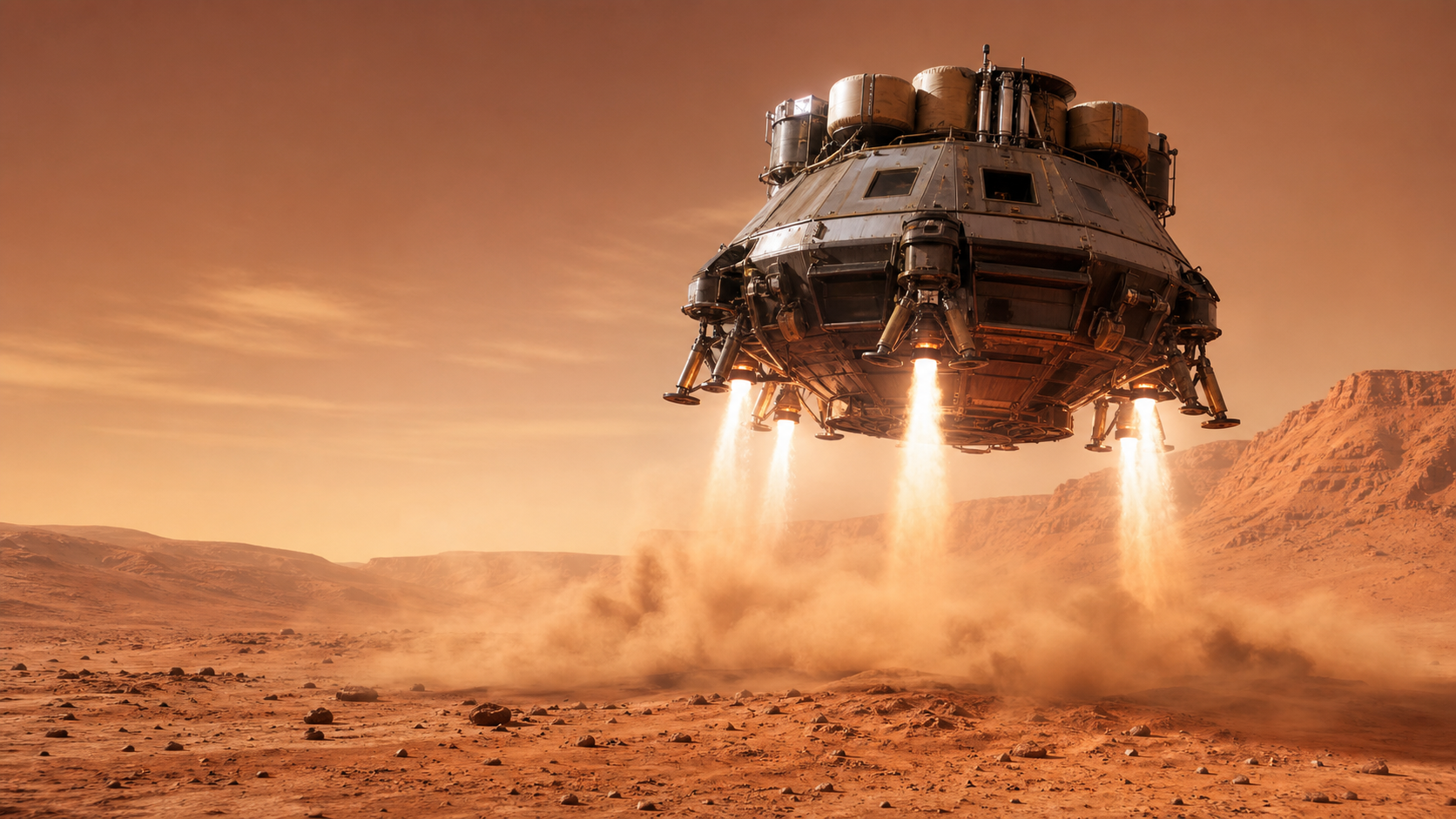
Arriving at Mars is not the same as landing on Mars. Small robotic landers can use heat shields, parachutes, rockets, airbags, sky cranes, or combinations of these systems. Human-scale cargo is different. Habitats, ascent vehicles, power systems, and passenger landers could be many times heavier than past Mars payloads.
The Martian atmosphere is thin, but it is not absent. An incoming vehicle must survive high-speed entry and shed enormous energy. Parachutes become less effective as payload mass rises. Rockets can slow a lander, but firing engines during supersonic descent through a dusty, turbulent atmosphere creates complex aerodynamic and control problems. This is why supersonic retropropulsion and precision landing remain important research areas for future human Mars missions.
Migration adds another requirement: landing accuracy. A settlement cannot have crucial supplies scattered across hundreds of kilometers. Cargo must touch down close enough to be recovered, but not so close that dust plumes or landing hazards damage existing infrastructure. Future Mars ports may need surveyed landing zones, beacons, autonomous traffic control, dust-management systems, and robotic recovery crews ready before each arrival wave.
Emergency Return Is Not Simple
On Earth, transportation safety depends partly on rescue. At Mars, rescue is mostly architecture. The distance is too great for immediate help. A crew that launches toward Mars may not be able to turn around easily, and once people land, returning to Earth requires a functioning ascent system, rendezvous capability, Earth-return vehicle, supplies, and the right trajectory timing.
That does not mean emergency return is impossible. It means it must be designed from the start. Cargo missions might pre-position Mars ascent vehicles and return propellant. Orbiting vehicles could remain available as safe havens or return stages. Surface bases could maintain reserve life support and medical capability for delayed departures. Some trajectories can provide free-return or flyby options, but these may constrain mission timing and surface access.
For a settlement program, the deepest safety strategy may be not evacuation but resilience. The more self-sufficient Mars becomes, the less every crisis depends on a return ship. Still, during the early migration era, no transport plan is credible unless it explains what happens when a vehicle breaks, a landing is delayed, a crew member becomes seriously ill, or a surface system fails before arrival.
What Remains Unsolved
The outline is clear: launch in windows, assemble and fuel in orbit, send cargo first, protect crews during cruise, land heavy payloads accurately, and build enough redundancy that one failure does not cascade into disaster. The unsolved part is scale.
No one has yet operated reusable Mars transports. No one has landed truly massive human-scale payloads on Mars. No one has run a closed-loop passenger habitat for months beyond Earth’s magnetic field with a large civilian population. No one has proven orbital refueling at the cadence a migration program would require. And no one has demonstrated that the economics, politics, training systems, and planetary-protection rules can support repeated human transfer campaigns for generations.
By 2300, those problems might be solved by steady engineering rather than magic. The first step is to stop imagining Mars migration as a single departure scene. It is a chain: factories, launch pads, depots, transfer vehicles, shelters, robots, landing zones, surface infrastructure, and return systems. Thousands of people could move to Mars only if every link becomes routine enough to trust with lives.
That is what makes Mars transportation such a powerful second question in this series. Water, food, power, habitats, medicine, and radiation protection all matter. But before any of them can become a Martian civilization, they have to cross space.
Leave a Reply