
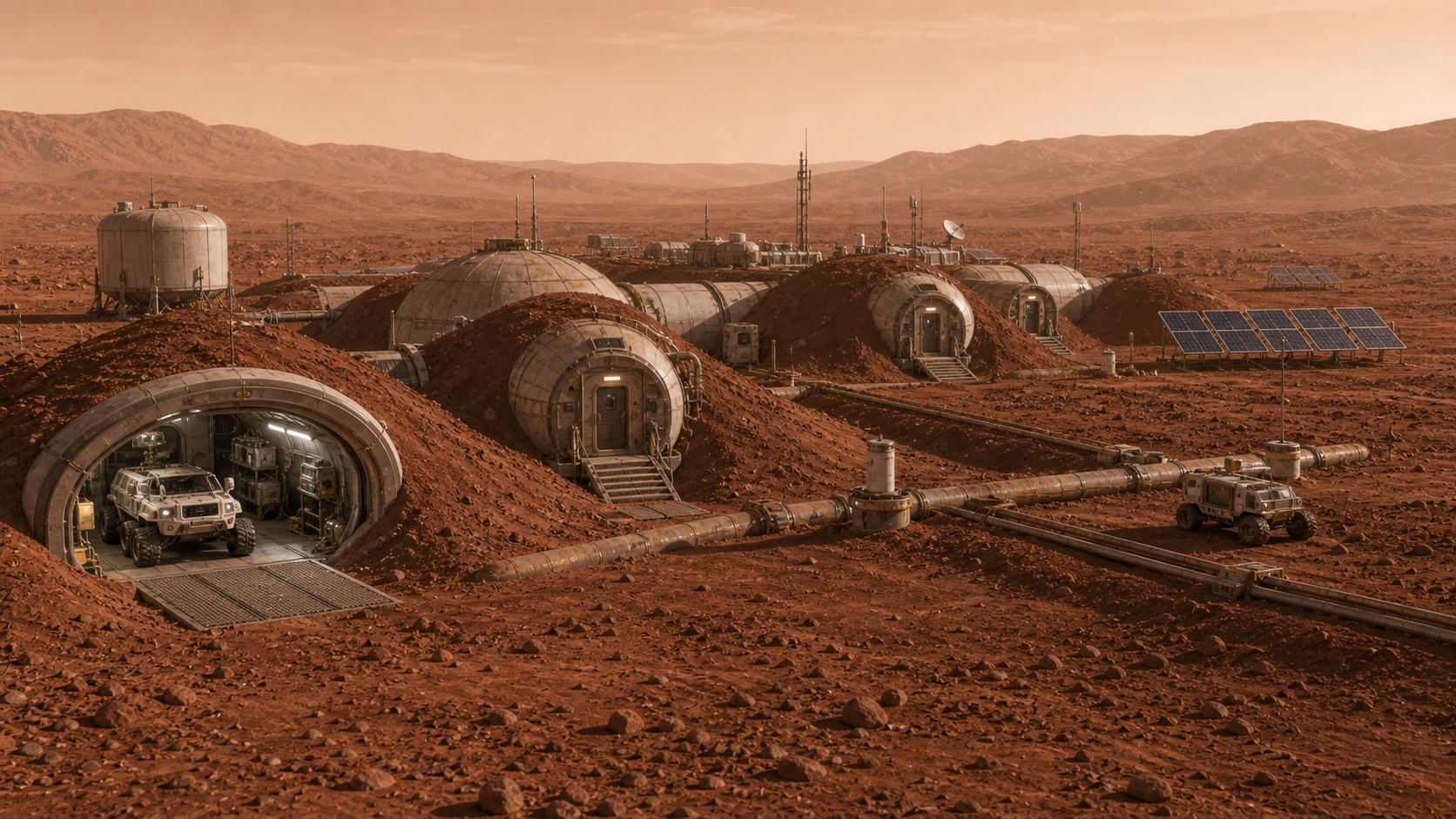
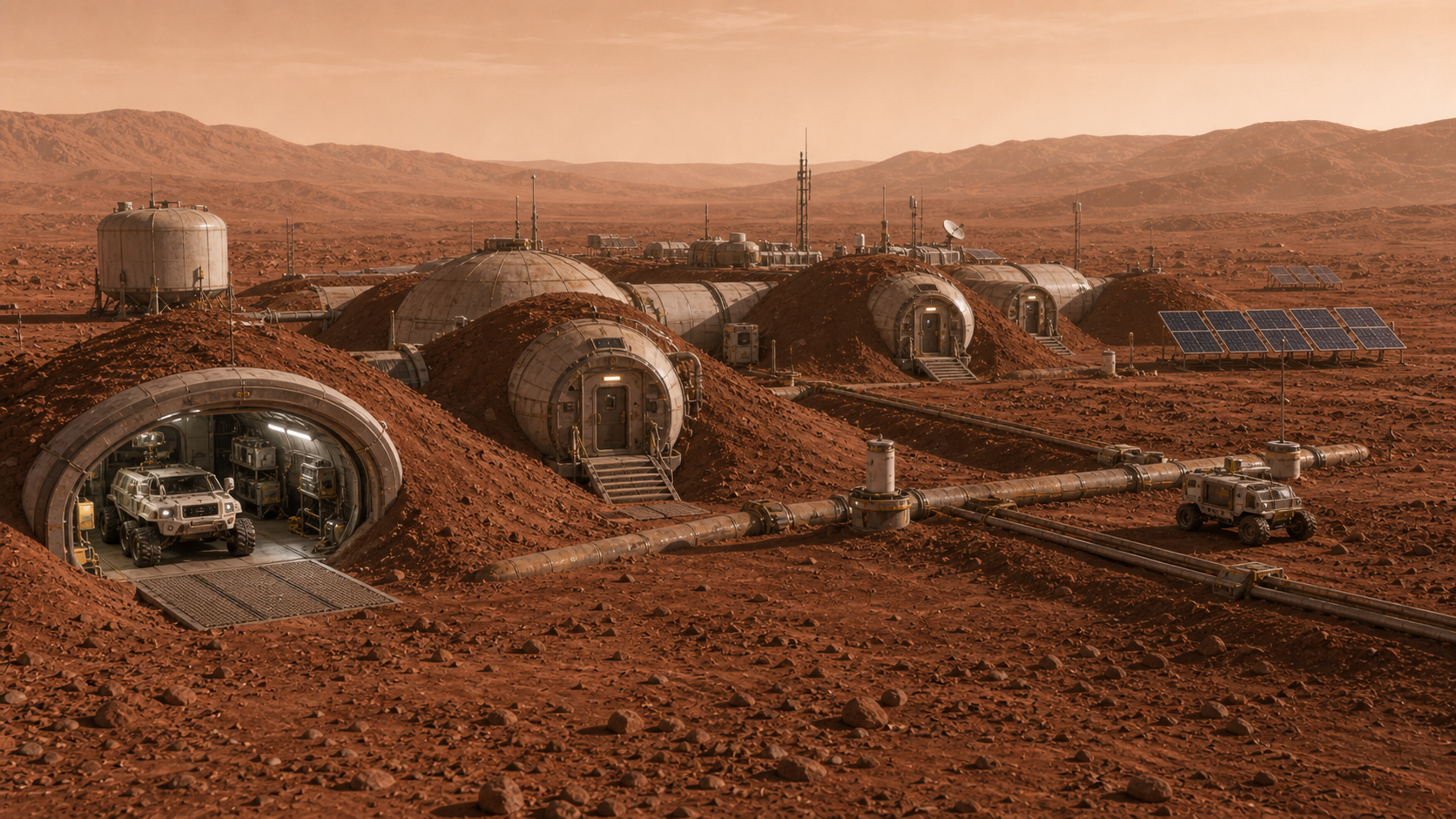
A Mars home has to do something no house on Earth does: hold a small pocket of Earthlike pressure against a world that is almost vacuum, freezing, dusty, chemically harsh, and exposed to radiation.
That makes Martian architecture less about style than survival. Walls are not simply walls. They are pressure barriers, radiation shields, thermal insulation, fire-control boundaries, dust filters, acoustic protection, psychological space, and maintenance surfaces. A city on Mars will not begin with boulevards and skylines. It will begin with safe pressure, clean air, reliable seals, and enough shielding that people can live for decades instead of weeks.
By 2300, Mars settlements may look varied and even beautiful. But the first rule of Martian housing will remain strict: every habitat is a life-support machine that people sleep inside.
The First Job Is Holding Pressure
Mars has an atmosphere, but it is far too thin for humans. A habitat must keep breathable air inside while resisting leaks, micrometeoroid damage, material fatigue, dust abrasion, seal wear, and thermal cycling. Pressure vessels can be rigid metal modules, composite structures, inflatable volumes with restraint layers, or hybrid systems. Whatever the material, the habitat must be inspectable and repairable.
That last point matters. A pressure shell that is strong but impossible to inspect is dangerous. Crews need access to seals, joints, valves, hatches, ducting, sensors, and patch points. A safe Mars city would divide living space into compartments so a leak in one module does not depressurize the whole settlement. Bulkheads, emergency doors, pressure sensors, and automatic isolation systems would be as ordinary as stairwells are on Earth.
Radiation Pushes Homes Underground
Unlike Earth, Mars lacks a global magnetic field and thick atmosphere to block much of the radiation environment. Galactic cosmic rays and solar particle events are long-term health hazards, especially for settlers who live there for years. Shielding therefore becomes part of architecture.
The simplest shielding material is already on Mars: regolith. Piling soil over habitats can reduce radiation exposure and improve thermal stability. Water, food stores, and waste tanks can also be placed around sleeping areas and storm shelters. NASA habitat concepts such as Mars Ice Home explored the idea of using water-rich shielding because hydrogen-rich materials can help reduce some radiation risk while also serving other life-support purposes.
There is a tradeoff. More shielding means more mass to move, more construction work, more structural load on the pressure shell, and harder access for repairs. A smart habitat may not bury everything equally. It might put sleeping quarters, medical rooms, and storm shelters deepest, while workshops, garages, and short-duration work areas receive less shielding.
Robots Will Build the First Protection
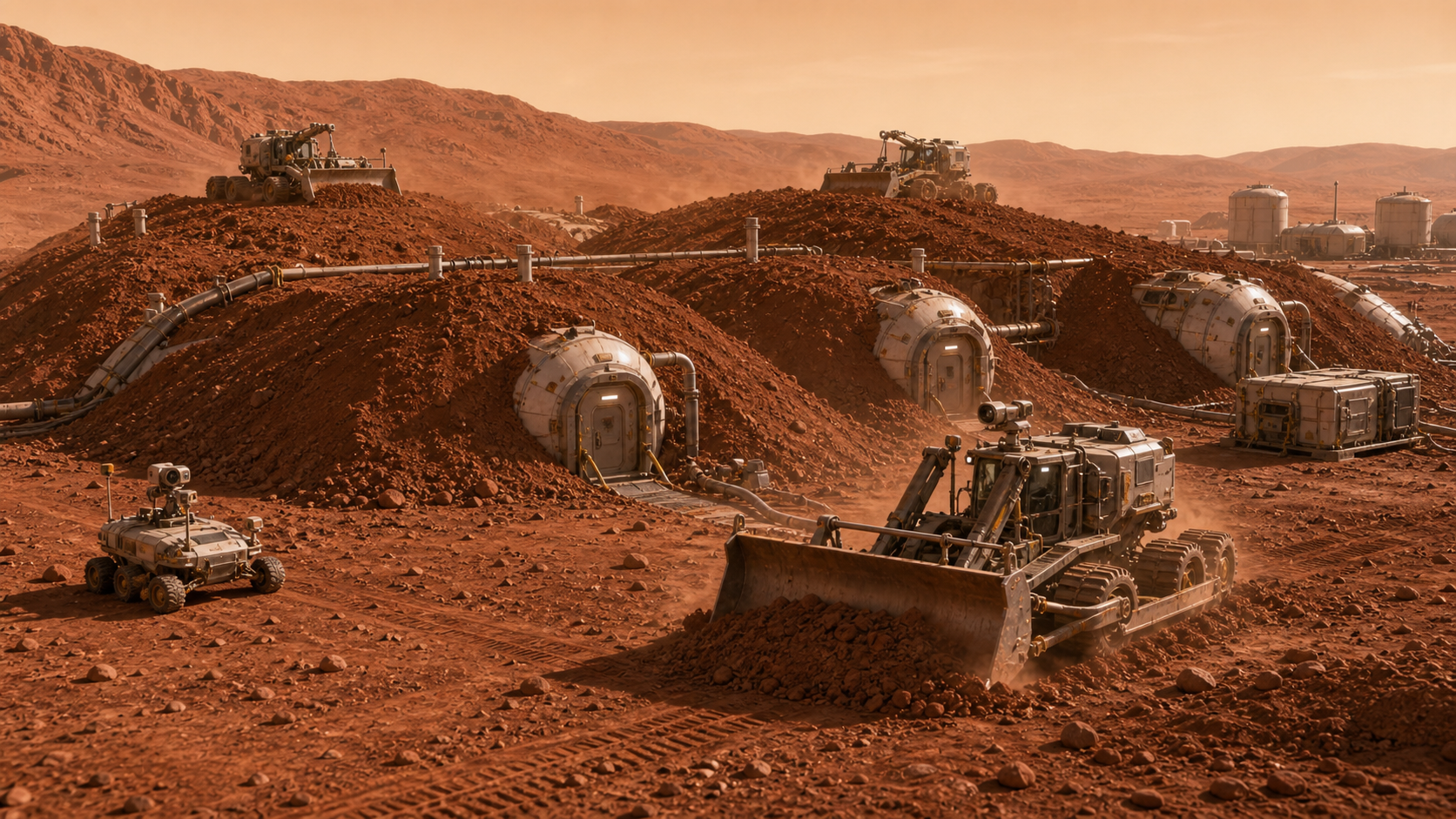
Humans should not arrive on Mars and then start building their own shelter from scratch. Cargo-first missions should land habitat modules, power systems, airlocks, rovers, construction robots, and spare parts before the crew departs Earth. Robots can grade terrain, move regolith, bury modules, build berms, inspect seals, and connect utilities under remote supervision.
NASA’s 3D-Printed Habitat Challenge and related construction research explored how local or simulated materials might be used to build large structures with automated systems. Future Mars construction may use printed shells, sintered regolith blocks, excavated trenches, inflatable cores, or prefabricated modules covered by local material. The exact method can vary, but the logic is consistent: use Earth-supplied precision where necessary and Martian mass where possible.
For early settlements, the safest approach may be conservative: land pressure-rated modules from Earth, then cover and connect them with robotic civil engineering. Later cities can add more ambitious local construction once materials, robotics, and inspection methods are proven.
Underground Space Solves Several Problems
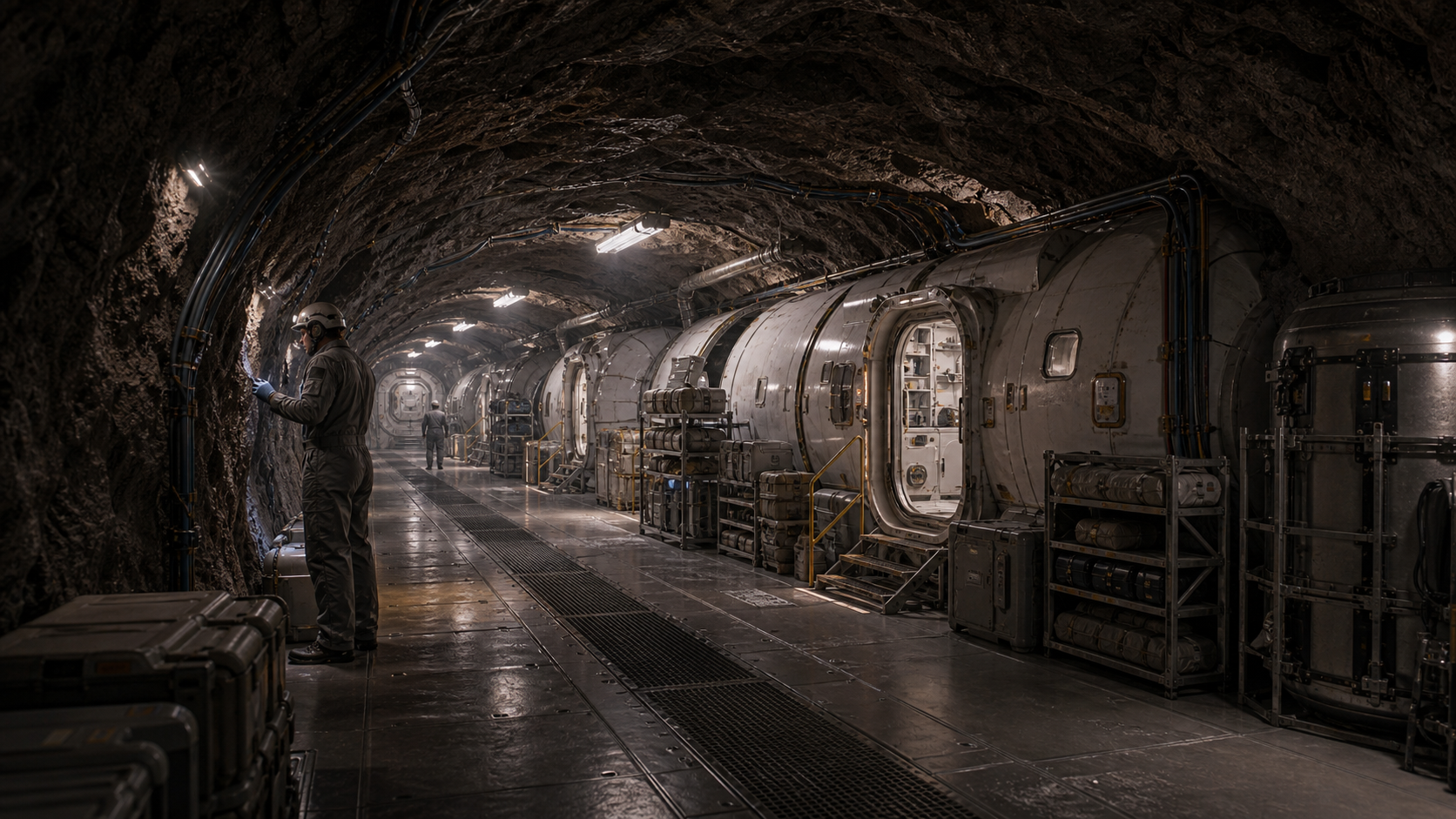
Underground habitats are attractive because they offer natural shielding, thermal stability, and protection from micrometeoroids and dust storms. Lava tubes are often discussed because they may provide large protected voids. Excavated trenches, covered tunnels, and bermed modules may be easier first steps.
Underground living also creates new risks. Rock stability must be proven. Dust and loose material must be controlled. Utilities must remain accessible. Emergency exits matter. A tunnel that protects against radiation but traps people during a fire or pressure event is not safe. The best underground designs may combine protected living zones with multiple pressure doors, emergency routes, sensor networks, and maintenance corridors where crews can inspect critical systems without going outside.
A Mars city may therefore grow as a hybrid: surface ports, rover garages, solar fields, antennas, and landing zones above; sleeping areas, storm shelters, water reserves, workshops, and utilities partly below.
Airlocks Are the Front Door of Survival
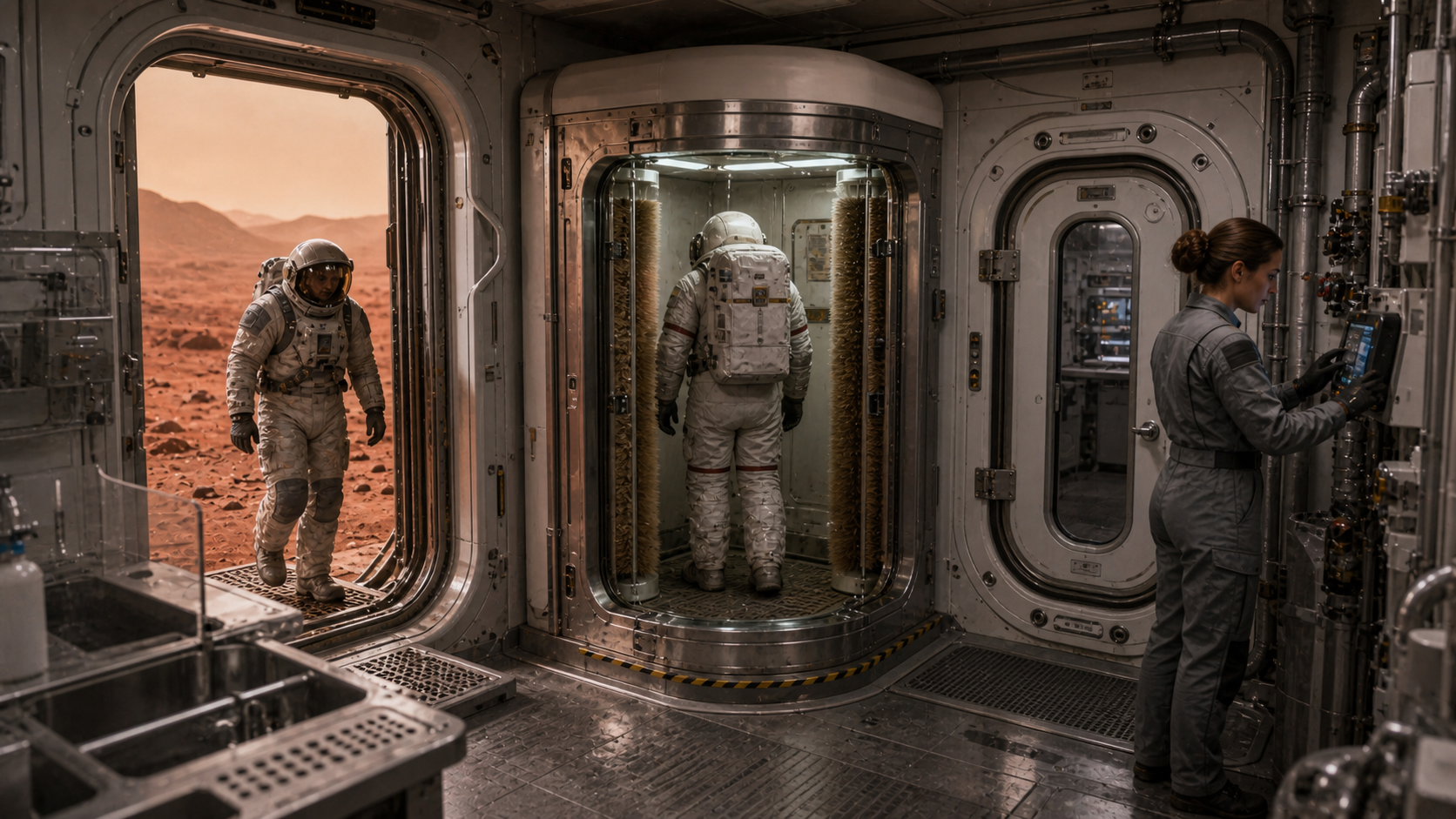
Every trip outside risks bringing Mars back inside. Dust is abrasive, electrostatic, and chemically troublesome. Perchlorates in Martian soil are a serious contamination concern. Airlocks must manage pressure loss, suit handling, dust removal, emergency entry, rover access, sample containment, and traffic flow.
Suitports, where a suit stays attached to the outside of a vehicle or habitat, may reduce dust entering living areas. Dedicated dirty zones, brushes, vacuum systems, washable surfaces, and separated maintenance bays will matter. Airlocks are not just doors. They are hygiene systems, safety systems, and logistics chokepoints.
A City Would Be Designed Around Maintenance
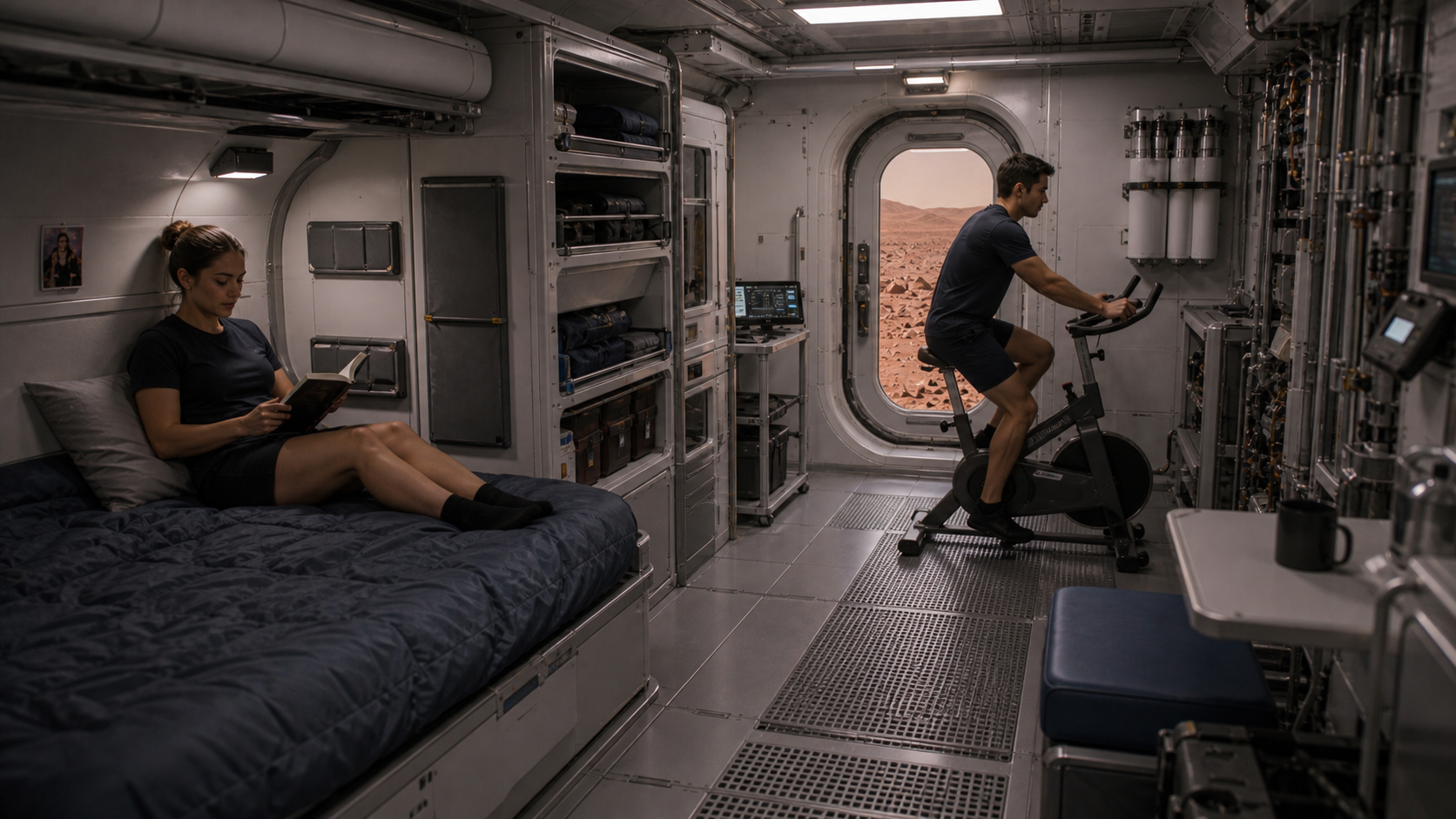
On Earth, buildings can tolerate a surprising amount of neglect before they become dangerous. On Mars, neglect would accumulate faster. A small valve leak, a dust-clogged filter, a failing pump, or a seal damaged by repeated airlock cycles could become a settlement-wide risk if nobody can find it early. The most important architectural feature may therefore be access: access to pipes, cables, tanks, pumps, filters, sensors, pressure doors, and structural inspection points.
That changes how a city is laid out. Instead of hiding utilities behind finished walls, Mars habitats may keep many systems visible in dedicated service corridors. Modules could be arranged in loops rather than dead ends, so people have more than one route during an emergency. Critical rooms would have redundant power, communications, and air paths. Water tanks, food stores, and spare parts could double as shielding where possible, turning logistics into architecture.
Good Mars design would also separate risks. A greenhouse has humidity, microbes, and plant material. A machine shop has dust, sparks, and tools. A medical room needs cleanliness and reliable backup power. A rover garage may bring in soil contamination and damaged equipment. Putting all of those spaces behind one open pressure volume would be convenient, but not resilient. A safer settlement would use zones, pressure doors, filtered transitions, and local emergency supplies so one failure does not cascade through the city.
This is where Martian architecture becomes more than shelter. It becomes operations design. The shape of the city should help crews notice trouble, isolate damage, repair equipment, and continue living while part of the settlement is offline.
What Remains Unsolved
The unsolved problem is not whether humans can make a pressurized room on Mars. They can. The challenge is building many rooms that remain safe through decades of leaks, repairs, dust, radiation, fire risk, equipment failures, and human stress.
NASA’s CHAPEA Mars Dune Alpha analog helps study how crews live and work in confined Mars-like mission conditions, but Earth analogs cannot fully reproduce Martian gravity, dust, radiation, or emergency distance. Real Mars housing will require testing, conservative design, robotic inspection, and a culture that treats maintenance as survival.
A safe Mars home will not be a bunker forever. It can have privacy, plants, color, views through protected windows, communal rooms, and a sense of place. But beauty comes after pressure integrity. The first architecture of Mars will be trust: trust that the seal holds, the air stays clean, the dust stays out, the radiation is managed, and the door can close before danger spreads.
Leave a Reply